Eloping in Italy is simpler than it seems, once you understand how it actually works.

We’re Benni and Carol – two sisters based in Italy who plan and photograph elopements across the country year-round, from the Alps to the Amalfi Coast. This guide is the one we wish every couple had before they started: clear, practical information that goes beyond the usual Pinterest inspiration, covering everything from the legal side to locations, real costs, the best seasons, and how to plan it all from abroad. Whether you picture a quiet ceremony in the mountains, a vineyard elopement at sunset, or a stylish celebration in an Italian city, you’ll find the answer here, along with links to learn more when you’re ready to go deeper.

If you’re feeling unsure about planning everything abroad, you’re not alone. Take a look at our guide:

Thinking of eloping in Italy but feeling unsure

Table of Contents:

Table of Contents:

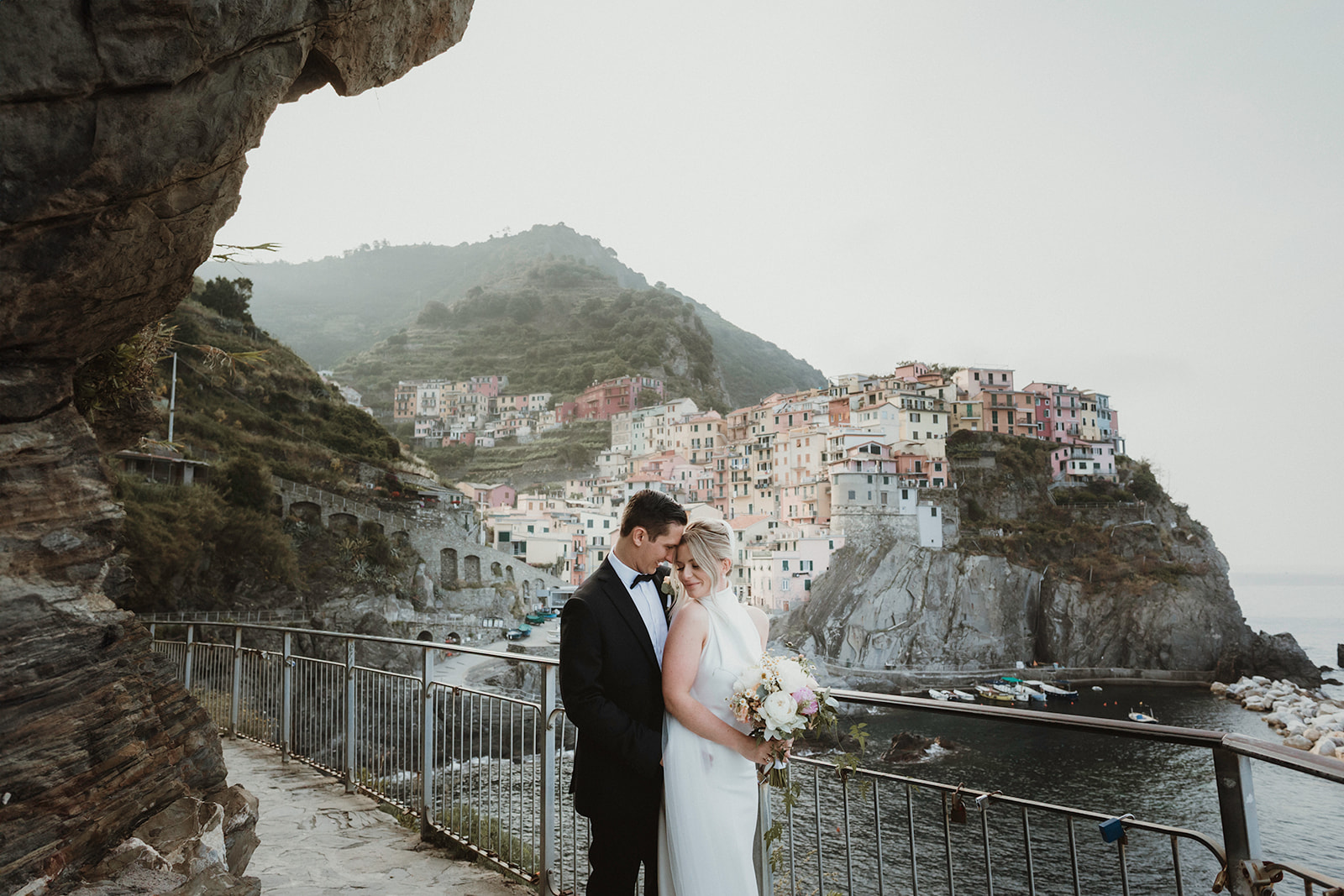
Couple embracing at sunrise with views on Manarola in the background for their elopement in Cinque Terre

How to Elope in Italy

You can legally elope in Italy as a foreign couple, though most international couples choose a symbolic ceremony – held anywhere, with no Italian paperwork – and complete the legal marriage at home before or after the trip. Most elopements in Italy cost between roughly €9,200 and €15,000, with an average around €12,000, depending on location, coverage, and vendors. The best months are May to early June and September to October, when the weather is mild and the crowds thinner, with sunrise or off-season timing for popular spots. Italy suits every kind of elopement – mountains, lakes, coast, countryside, or historic cities – so the main decision is matching the region to the experience you want. Because permits, paperwork, and logistics vary by region, most couples work with local elopement experts who plan and photograph these days year-round.

Eloping in Italy comes down to five decisions:

1. Where? Choose the region that matches your vision – Tuscany for countryside, Lake Como for lakeside elegance, the Alps for dramatic mountains, the Amalfi Coast for the sea.

2. What kind of ceremony? Symbolic for maximum freedom of location; legal if you want the marriage itself to happen in Italy.

3. When? Spring and early autumn are the most popular; each region has its own ideal window.

4. What is your budget? Most couples spend €9,200 – €15,000 depending on location and coverage.

5. Which vendors will you work with? Local elopement experts handle permits, vendor coordination, location scouting, and a timeline built around light and landscape.

The rest of this guide walks through each of these in detail – from legal requirements and real costs to the best places to elope across Italy.

WHY ELOPE IN ITALY

Couples elope in Italy for the rare combination of natural beauty, cultural richness, and effortless romance – few places turn an intimate ceremony into something this cinematic while still feeling grounded in real, lived culture. In a single country you can exchange vows on an Alpine ridge, in a Tuscan vineyard, beside a quiet lake, on a cliff above the Mediterranean, or in a centuries-old city, and the light and landscape do half the work. Italy also offers unusual flexibility: a symbolic ceremony almost anywhere, a legally binding civil wedding in designated venues, or a religious ceremony within the Catholic Church. That range – plus an atmosphere that naturally slows the day down – makes it ideal for couples who want an experience rather than a production.

This guide is written for couples who are:

  • eloping alone or bringing a small group of guests
  • LGBTQ+ couples seeking welcoming locations and flexible ceremony options
  • adventure-focused couples drawn to mountains, hikes, and sunrise sessions
  • choosing an intentional celebration over the cost and scale of a big wedding
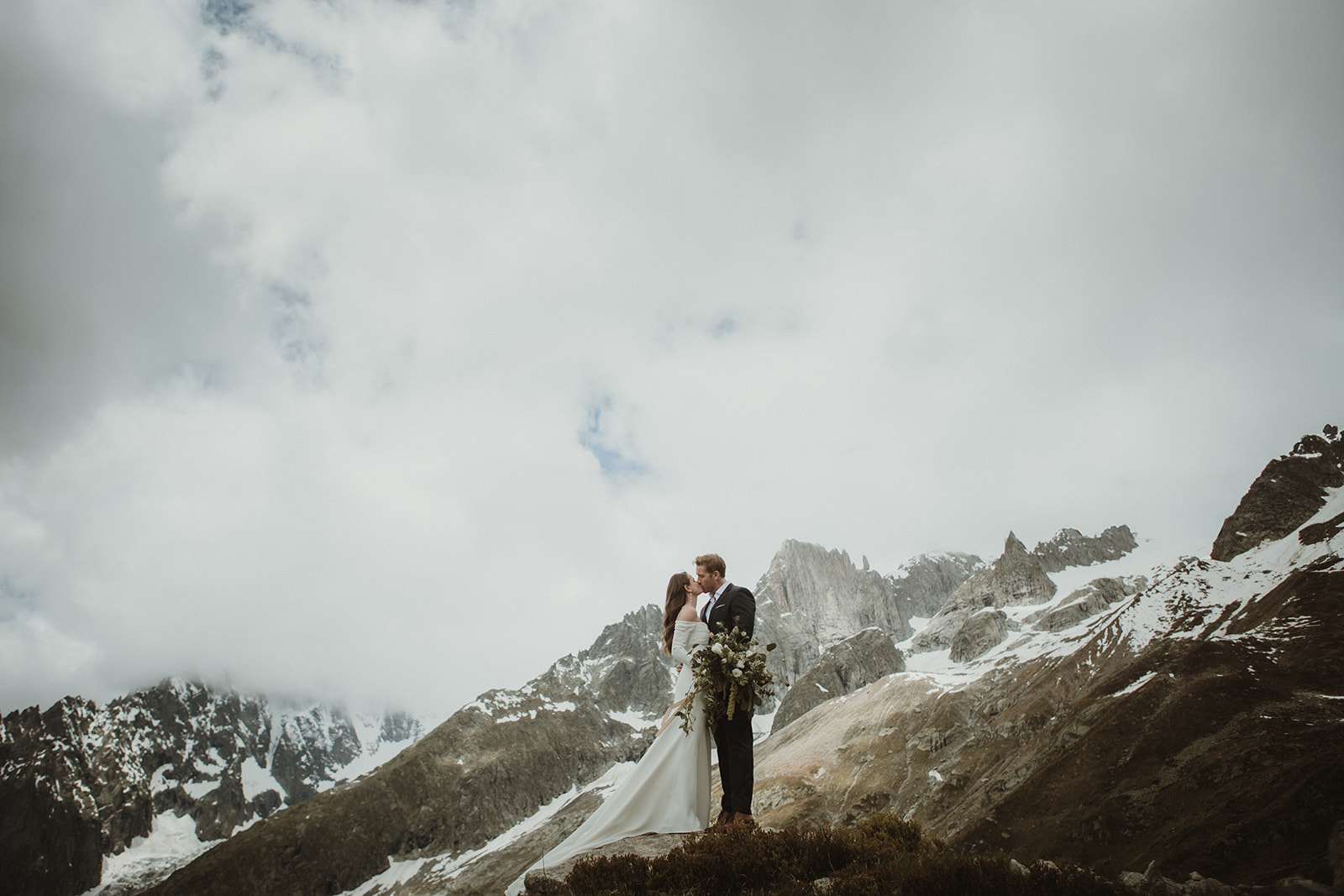
Couple kissing together on a mountain ridge in the Italian Alps during an intimate elopement.

LEGAL VS SYMBOLIC CEREMONY IN ITALY

Foreign couples can legally marry in Italy through a civil ceremony, but most international couples choose a symbolic ceremony and complete the legal paperwork at home before or after the trip. The difference comes down to one thing: whether you want the legally binding marriage to happen in Italy itself, or just the celebration.

A symbolic ceremony carries no legal weight, which means it can be held anywhere – a mountaintop, a vineyard, a cliff, a private garden – with no Italian paperwork and complete freedom over location, timing, and wording. A civil ceremony is legally binding and recognised worldwide, but must take place in a town hall or authorised venue and requires specific documentation. A Catholic ceremony is legally binding only when both the religious and Italian civil requirements are met and involves additional parish coordination.

Symbolic Ceremony Civil Ceremony Catholic Ceremony
Legally binding? No Yes Yes, if civil requirements are met
Where it can be held Anywhere Town hall or authorised venue Approved churches
Paperwork in Italy None Required, depending on nationality Extensive parish and civil paperwork
Best for Maximum freedom of location and timing Couples wanting the legal marriage to take place in Italy Couples with strong religious ties
Because a symbolic ceremony offers complete freedom of location without the bureaucracy, it is the most popular choice for elopements in Italy. Most couples complete the legal formalities at home and keep the day itself entirely their own.
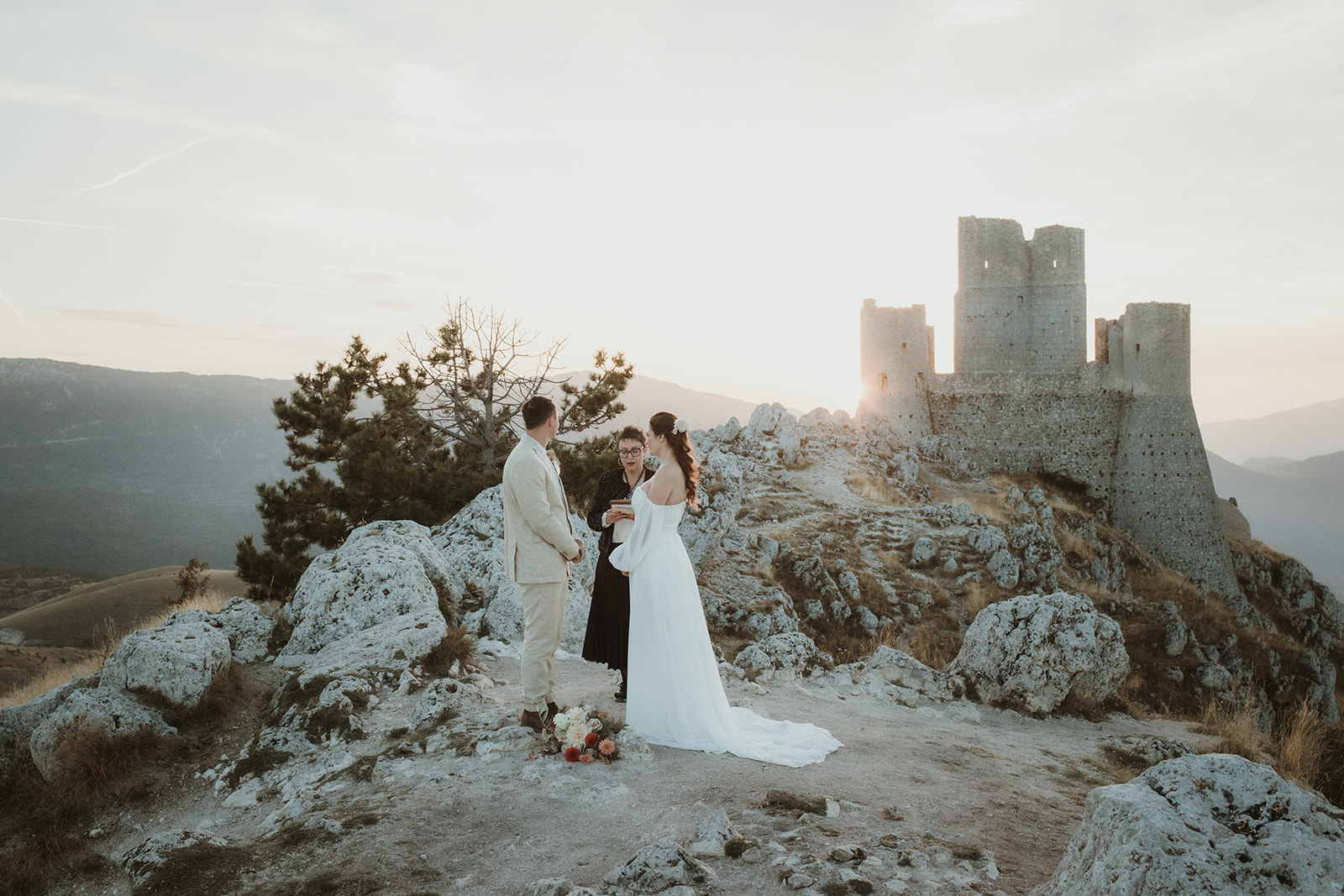
Couple on their symbolic ceremony at dawn in Central Italy on a rocky mountain with medieval castle in the background

Legal Requirements for Foreigners

The documents you need depend on your nationality and current country of residence. Below are the requirements for some of the most common cases.
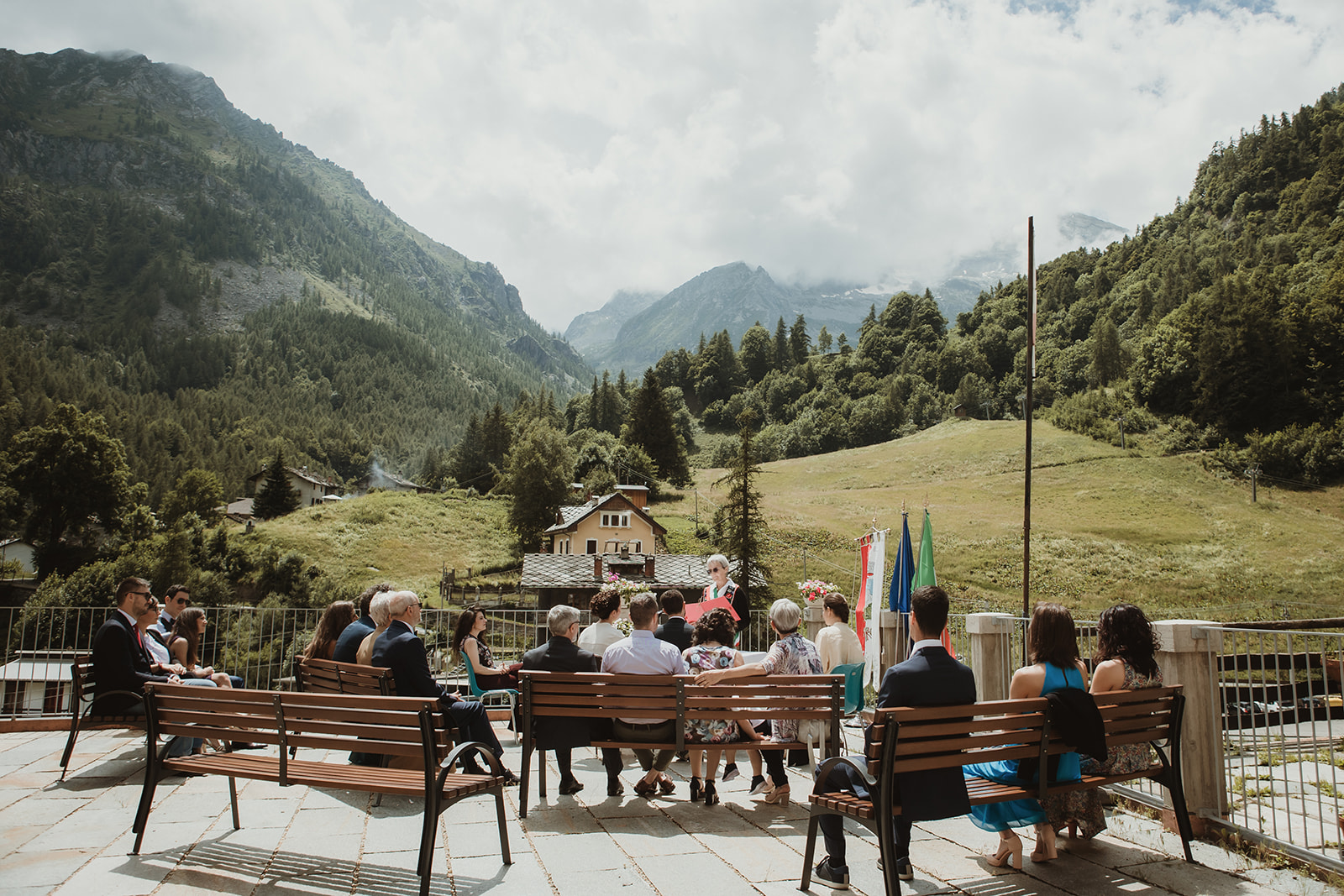
Small wedding party for an elopement in the Italian Alps during a civil ceremony

Legal Requirements for US Citizens

US citizens planning a civil marriage in Italy typically need:

– a valid US passport

– a Dichiarazione Giurata (sworn declaration) — obtained at the US Embassy/Consulate in Italy

– a Nulla Osta issued by the US Embassy/Consulate

– an Atto Notorio (sometimes required, depending on region and circumstances)

– translations and apostilles if any document is not in Italian

Begin preparing documents 8–12 weeks before travel, as processing times vary between Italian regions.
Legal Requirements for UK Citizens

UK citizens need:

– a valid passport

– a Certificate of No Impediment (CNI) issued in the UK

– the CNI legalised with an apostille

– a Statutory Declaration signed before a solicitor in the UK

– translations by a recognised translator in Italy if required

Begin this process around 3 months before your elopement to allow time for appointments and shipping.

Legal Requirements for Canadian Citizens

Canadian requirements include:

– a valid passport

– an Affidavit of Single Status (sworn declaration)

– a Statutory Declaration from the Canadian Embassy in Rome or Consulate

– a Nulla Osta (issued by the Embassy once documents are verified)

– translations and apostilles as needed

Canada does not issue a Certificate of No Impediment, so the affidavit process replaces it.
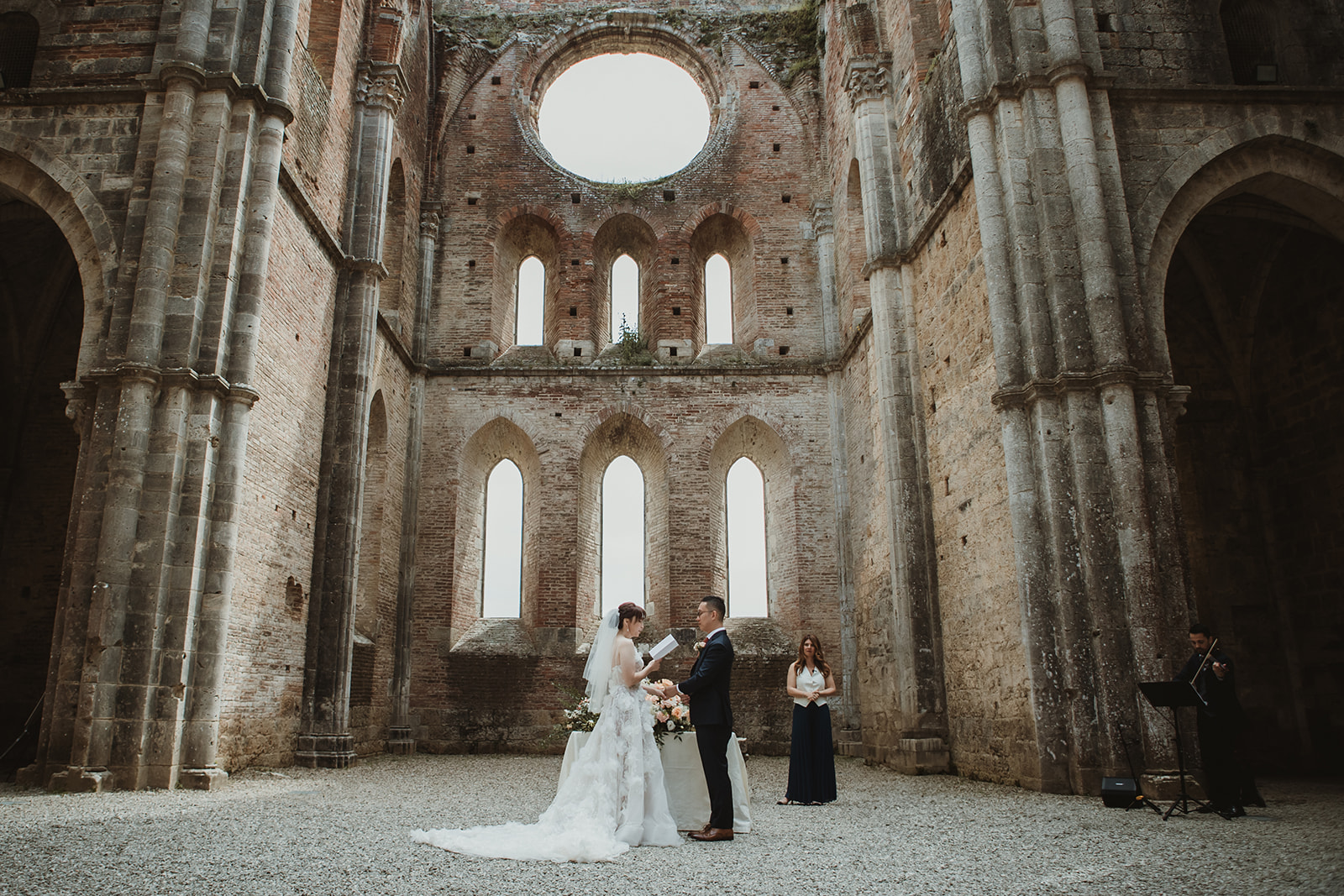
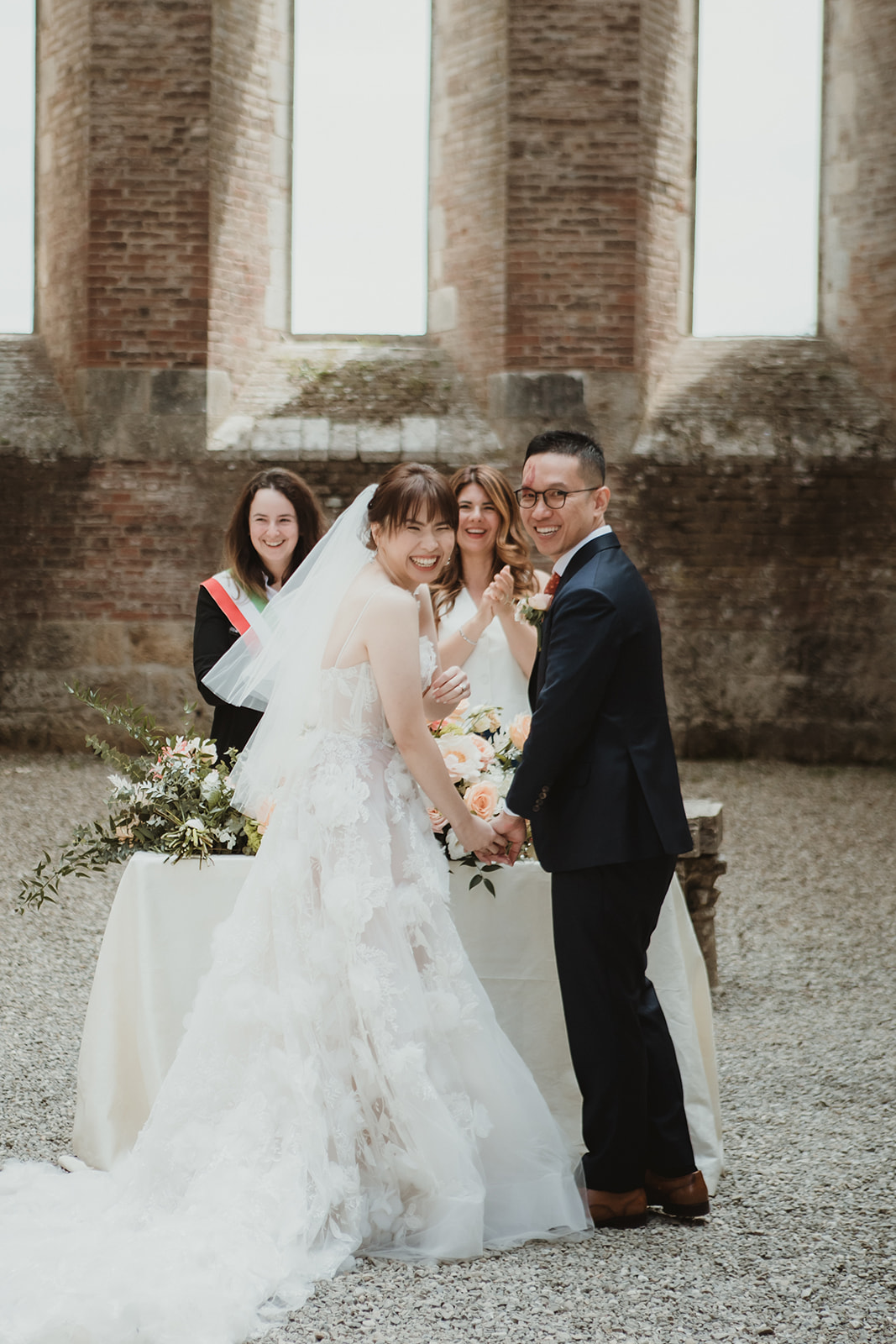
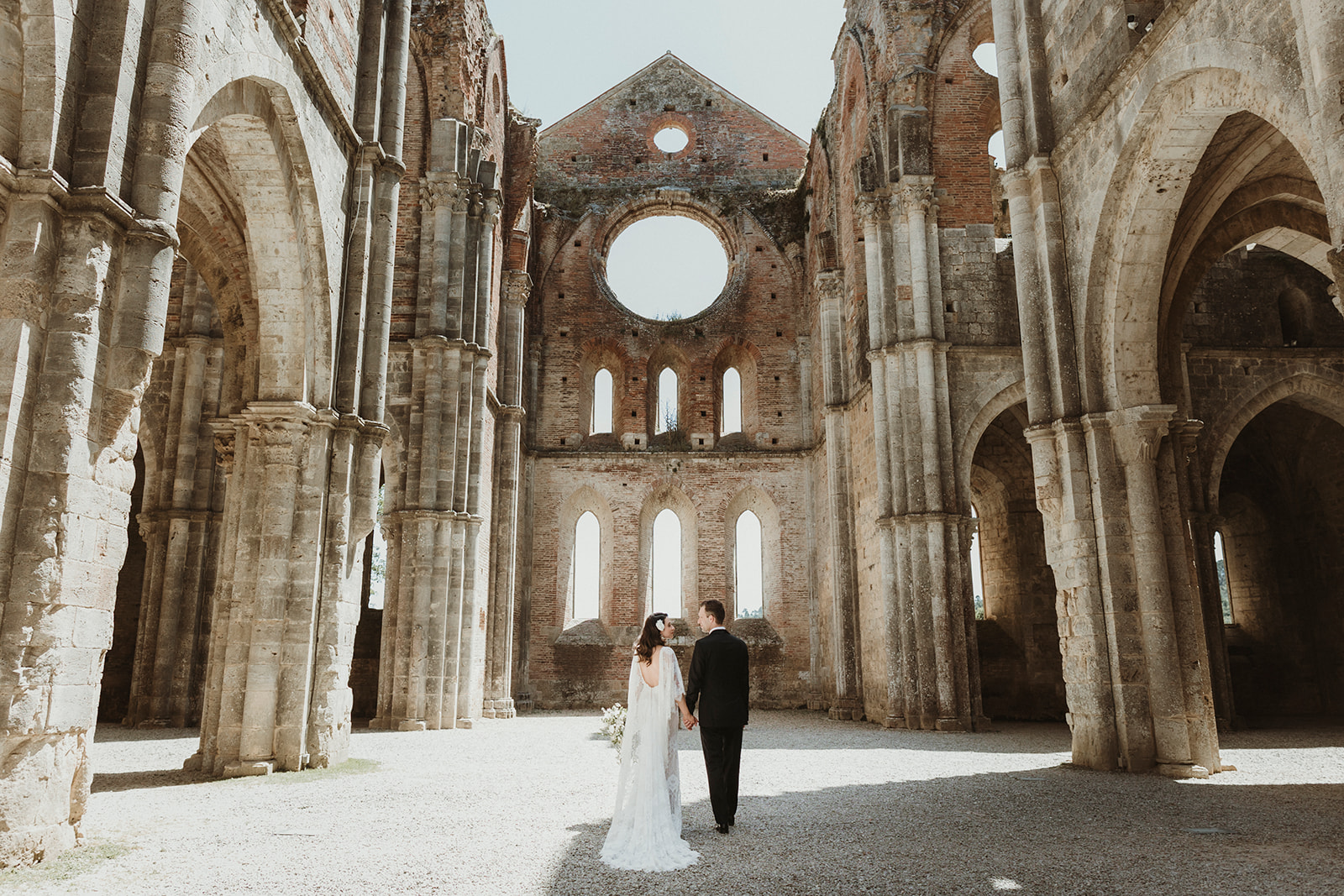
Bride and Groom exchanging vows on their civil ceremony at San Galgano, for an elopement in Tuscany
Bride and Groom laughing during their civil ceremony at San Galgano on their elopement in Tuscany

Required Documents (Complete Checklist)

While requirements vary by nationality, most couples having a legal ceremony will need:

  • valid passports
  • birth certificates (long-form versions may be required)
  • proof of termination of any previous marriage (divorce decree / death certificate)
  • a Nulla Osta
  • an Atto Notorio (if applicable)
  • apostilles
  • certified translations of non-Italian documents
  • an interpreter (required in some regions if neither partner speaks Italian)
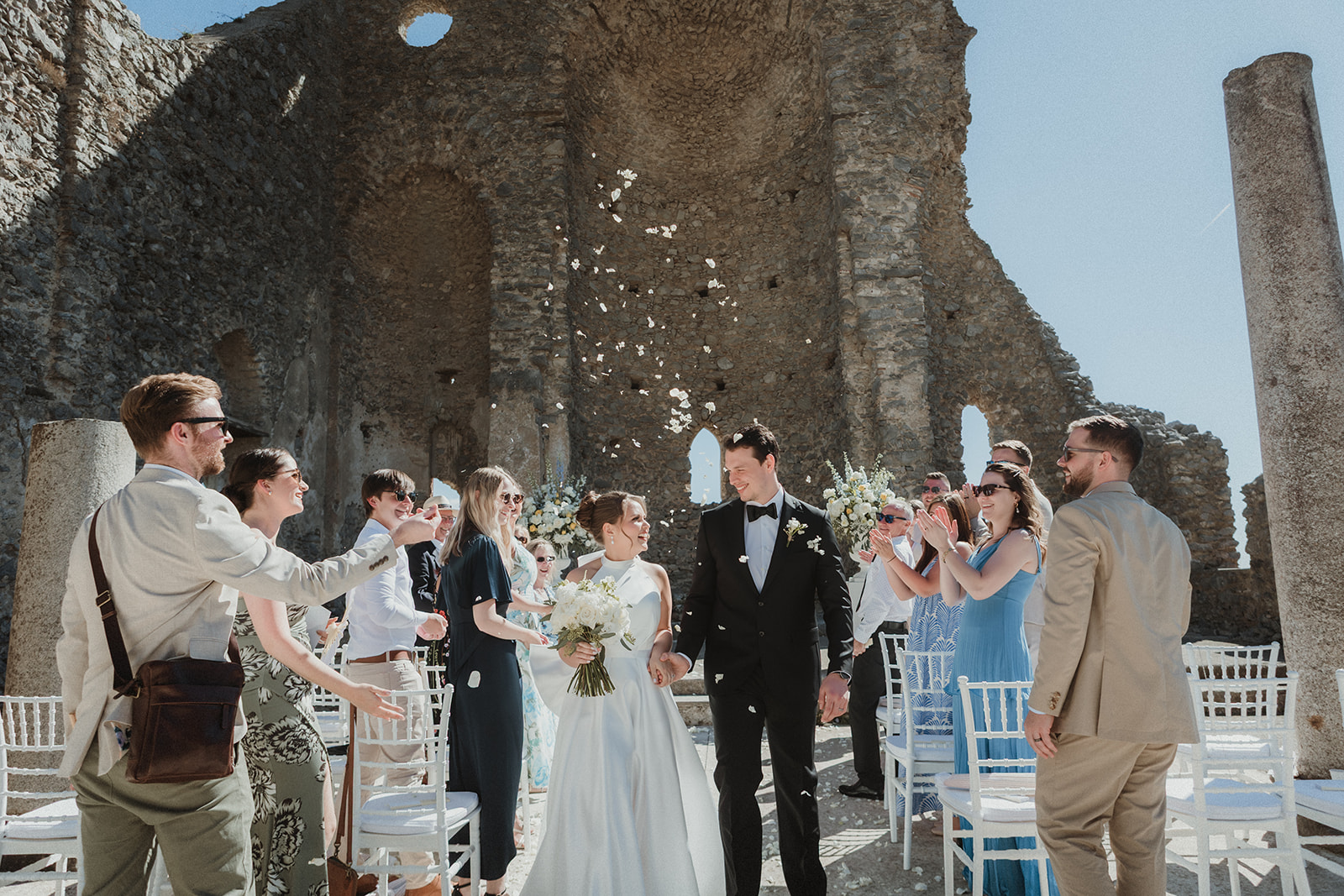
Couple laughing while small wedding party throws confetti after their ceremony for their elopement in the Amalfi Coast

Where Can You Legally Marry in Italy?

Civil weddings can only be performed in town halls, or in venues specifically authorised for civil ceremonies such as certain villas, castles, and historical buildings. Symbolic ceremonies, by contrast, can be held anywhere – mountains, lakes, cliffs, vineyards, forests, seaside locations, private villas, or any spot you choose. This is why most couples pair a symbolic ceremony with portraits and meaningful moments in the landscape.
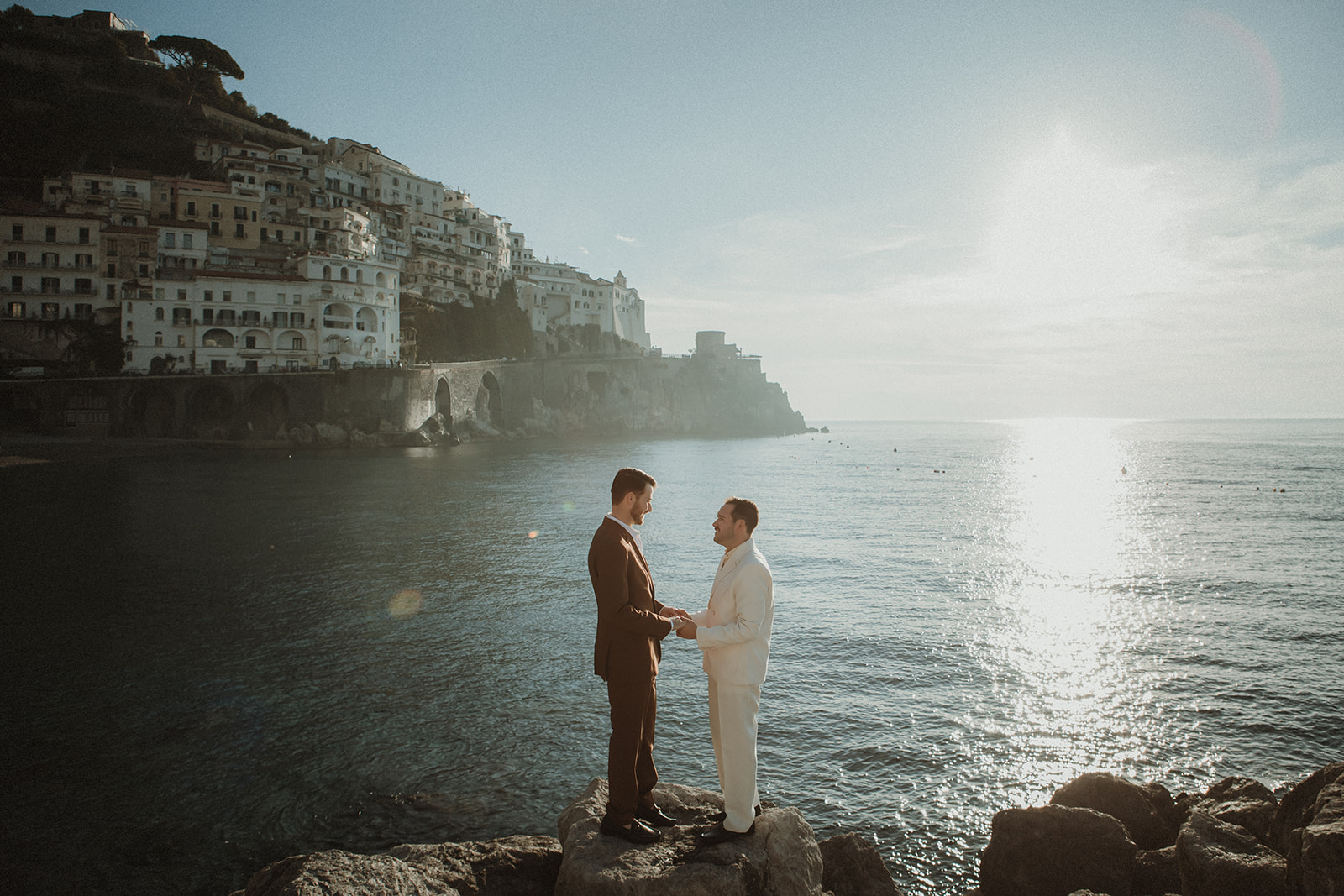
Queer couple exchanging vows at dawn for their elopement in the Amalfi Coast with crystal clear water in the background

Catholic Elopements in Italy

For couples wishing to marry within the Catholic Church:

– at least one partner must be Catholic

– you’ll need pre-marriage preparation certificates from your home parish

– additional documents (baptism certificate, confirmation certificate, freedom-to-marry form)

approval from both dioceses

– coordination between Italian clergy and your home parish

A Catholic ceremony is legally binding in Italy when the civil requirements are completed as part of the process.

Couple standing in front of Duomo of Cefalù with dramatic sky and rainbow on their elopement in Sicily

HOW MUCH DOES IT COST TO ELOPE IN ITALY?

Most elopements in Italy cost between €9,200 and €15,000, with an average around €12,000. The three biggest variables are region, ceremony type and season: Tuscany and Sicily are the most cost-balanced regions, while Lake Como, the Amalfi Coast and Venice sit at the premium end. A symbolic ceremony also costs significantly less than a civil one, as it avoids municipal fees, paperwork and interpreter costs entirely. Choosing your season is the single easiest way to bring the cost down.

For the full breakdown – region-by-region costs, civil vs symbolic fees, real budget scenarios, and how to elope in Italy on a budget:

How Much Does It Cost to Elope in Italy?

Bride and Groom kissing after their dawn ceremony in a secluded spot during their elopement in Venice

BEST PLACES TO ELOPE IN ITALY

Italy’s elopement regions fall into four broad types – alpine mountains, lakes, coastline, and countryside or historic cities – and the best choice comes down to how you want to experience your wedding day and the landscape you want around you. Italy changes character every few hours’ drive: you can wake at 4am to hike a ridge in the Aosta Valley with four 4,000-metre peaks around you, or step out at dawn into a Venice with no one in it, the canals still and the light pastel on the water. You can say your vows among cypress trees in Val d’Orcia in October, or on a cliff above the Tyrrhenian Sea in December, when the Amalfi Coast finally belongs to the people who live there. The regions below aren’t ranked – they’re different experiences. What they share is that all of them reward choosing the season carefully.

The Italian Alps

Couple exchanging their vows on a flowery meadow in the Italian Alps

Italy’s Alps offer genuine high-mountain landscapes – the Aosta Valley alone is ringed by Mont Blanc, Monte Rosa, Gran Paradiso and the Matterhorn, four peaks above 4,000 metres. The Dolomites hold the icons (Tre Cime di Lavaredo, Lago di Braies), but they draw the crowds with them; because the range stretches across such a wide area, equally beautiful and far quieter valleys are easy to find. Areas like Valle Stretta on the French border see almost no tourism at all, which means you’ll often have the landscape entirely to yourselves. Best from June to September, with sunrise the most rewarding – and often the most private – time to exchange vows.

The Ultimate Guide to Plan an Elopement in the Italian Alps

Tuscany

Our home region, and one of the most versatile in Italy: the rolling hills and cypress-lined roads of Val d’Orcia, vineyard scenery in Chianti, medieval towns like San Gimignano, Pienza and Montalcino, historic abbeys such as San Galgano, and even coastline at Monte Argentario. Autumn and spring are our favourite periods here – the light is softer and the countryside is at its best. Tuscany is also one of the most cost-balanced regions in Italy, with a deep network of local suppliers.

The Ultimate Guide to Plan an Elopement in Tuscany

Lake Como

Wedding couple looking at Villa del Balbianello from their boat during their Lake Como elopement

Lake Como isn’t one place but a collection of villages, villas and hidden corners, each with a very different feel – Bellagio, Varenna and Lenno, alongside private villas like Villa del Balbianello and Villa Monastero. It’s one of the most iconic places to elope in Italy and also one of the most expensive; what surprises couples is that the cost sits less in the ceremony than in access to locations and logistics. Choosing a quieter village over a headline villa changes the day’s economics entirely without losing the lake.

How to Elope in Lake Como

Amalfi Coast

One of the most beautiful coastlines in Italy, where the mountains drop vertically into the Tyrrhenian Sea. Positano, Amalfi and Ravello are the famous names, but quieter and more affordable towns sit along the same coast. The Amalfi Drive – an ancient Roman road carved into the cliffs between Sorrento and Amalfi – and the Path of the Gods trail are both worth building into the day. We most often recommend eloping here in the off-season: the setting is spectacular, but navigating the crowds takes local knowledge, and some of our best days here have been in December.

A Comprehensive Guide to Plan an Elopement in the Amalfi Coast

Venice

Couple sailing off at sunset in Gran Canal in Venice for their Italy elopement

Venice can be very crowded – but turn away from the main tourist areas, or explore early in the morning or late at night, and it becomes extremely peaceful, still and mysterious. The pastel buildings, the canal water and the soft light give the city a dreamy atmosphere that’s perfect for portraits. Be prepared for an early start: if you want the city centre to yourselves, get up as the sun rises. And embrace the weather – on a clear day you’ll get pastel colours and soft light toward sunset, while overcast skies turn the mood dramatic. Off-season (September–November, late March and April) is the best time, but check for the Carnival in February, the Film Festival in late August, the Biennale, and Italian bank holidays.

A Romantic Venice Elopement at Palazzo Contarini del Bovolo

Cinque Terre

Couple embracing at sunrise with views on Manarola in the background for their elopement in Cinque Terre

Five cliffside villages – Monterosso, Vernazza, Corniglia, Manarola and Riomaggiore – with colourful houses stacked above the Mediterranean and terraced vineyards behind. It’s more accessible than the Amalfi Coast but vendor availability is limited, and logistics are shaped by boats, trains and vertical paths. Best for sunrise elopements, because of crowds and limited space; a boat at sunset is close to mandatory, and there’s no reason the ceremony itself can’t happen while sailing.

Elope in Cinque Terre: A Comprehensive Guide

Rome

Couple Kissing in front of ancient ruins in Rome during their elopement in Italy

Rome offers a balance the other headline destinations don’t: genuinely historic settings – the Campidoglio, the Baths of Caracalla – without the pricing of Lake Como or the Amalfi Coast. It’s Italy’s largest city, though, and that’s the thing to plan around: navigating it on the day takes vendors who know it well, and a sunrise ceremony not only avoids the crowds but means no venue fees at all. Best for couples who want art, culture and iconic landmarks woven into the day rather than a landscape.

A Family Elopement in Rome

Sicily

Couple kissing at sunset with dramatic light and view of Taormina on their elopement in Sicily

Sicily is one of the most cost-accessible regions in Italy, and it gives up nothing for it: dramatic light, wild coastlines, Baroque towns like Taormina, Noto and Cefalù, and Mount Etna. Vendor rates are lower here than in the north, and the island rewards slow travel – it’s the region we’d point couples toward who want somewhere away from Italy’s busiest destinations without compromising on scenery. Sunrise works beautifully on the coast, and Etna’s volcanic trails offer something no other Italian region can.

A Sunrise Elopement in Taormina, Sicily

For the full picture – take a deeper dive into every region we work in, including the quieter alternatives we’d steer you toward:

Best Places to Elope in Italy

Couple walking on a volcanic ridge on Mount Etna with views of the sea and the bays on their elopement in Sicily

BEST TIME TO ELOPE IN ITALY

The best months to elope in Italy are May to early June and September to October, when temperatures are warm but not intense, the light is soft, and the crowds have either not arrived or thinned out. July and August are the least recommended period across most of the country – heat, crowds and peak travel prices – with the exception of high-altitude alpine elopements and sunrise ceremonies on the coast. The difference between May and August in the same location can be dramatic. Weather, light, crowds and travel conditions shift significantly between regions, so the sections below break the year down month by month, with practical guidance based on real elopements across the country.

March – April: Early Spring

Elope in Italy

Early spring brings mild temperatures in central and southern Italy while the Alps still hold snow. Flowers begin blooming in Tuscany and Umbria, and many locations feel calm before the tourist season begins.

Best for:

– Tuscany countryside

– Rome and Florence city elopements

– Sicily and the south

– late-winter alpine portraits

Avoid if:

– you want fully open mountain passes (still snowbound)

– you prefer stable weather – April can be unpredictable

May – Early June: Late Spring (One of the Best Times)

This is one of the most reliable and beautiful periods for an Italy elopement. Days are long, temperatures are warm but not intense, and landscapes are at their greenest. Mountain access improves, and the coast is lively without being overwhelmed. Photography conditions are consistently excellent.

Best for:

– Lake Como

– Amalfi Coast

– Tuscany vineyards

– Dolomites and Alps lower-altitude trails

– all outdoor symbolic ceremonies

Late June – August: High Summer (Least Recommended Period)

Summer offers vibrant colours, clear skies and warm evenings – but it also brings heat, crowds and peak travel prices. Sunrise elopements are strongly recommended for popular destinations like Venice, Rome and the Amalfi Coast.

Best for:

– alpine elopements at higher elevations

– mountain hikes with accessible trails

– northern lakes (Como, Maggiore, Garda)

– sunrise ceremonies on the coast

Avoid if:

– you struggle with high heat, particularly July and August

– you want very quiet locations

September – October: Early Autumn (Another Peak Period)

Couple kissing with the most dramatic sunset light within Cypresses in the Tuscan countryside on their elopement in Italy

Early autumn is one of the most favourable times to elope in Italy. Temperatures mellow, the summer crowds thin, and landscapes shift into autumn colours, especially in the mountains. Light is softer and more golden, making this a superb season for photography.

Best for:

– Tuscany (harvest season)

– Lake Como

– Venice

– Aosta Valley, Mont Blanc and the Dolomites

– Sicily and southern regions

November – February: Winter

Winter in Italy varies dramatically by region. Northern Italy sees snow, moody skies and colder temperatures – atmospheric and beautiful for certain styles of elopement. Central and southern regions stay milder, with quiet cities and empty coastlines offering a different kind of intimacy.

Best for:

– mountain snow elopements

– Venice (quiet, misty atmosphere)

– Rome, Florence and urban elopements

– Sicily and the southern destinations

Avoid if:

– you want guaranteed clear skies

– you’re planning high alpine hiking (most trails are closed)

– you like warm Italian weather

Couple walking hand in hand on a desert beach in Positano at sunset during their Winter Amalfi Coast elopement

Weather, Crowds and Photography Conditions

Weather Italy's climate varies dramatically from the Alps to Sicily and from the coastline to the mountains. Symbolic ceremonies can be held almost year-round, while legal civil ceremonies in outdoor authorised venues may be affected by local regulations and seasonal weather.
Crowds Tourism is at its busiest from mid-June through early September. Couples looking for quieter locations should consider sunrise ceremonies during summer, sunset celebrations in spring or autumn, or travelling during the off-season to enjoy Italy's most iconic destinations with far fewer visitors.
Photography For the most flattering natural light and comfortable temperatures, May to June and September to October are generally ideal. During July and August, sunrise offers the softest light, cooler conditions and the best chance to experience famous locations without the crowds.

Dates to Avoid

A few fixed dates fill popular destinations with domestic visitors as well as international ones: the Venice Carnival in February, the Venice Film Festival in late August and early September, the Biennale, and Italian bank holidays throughout the year.

Couple laughing right after exchanging vows at dawn in the most intimate lakeside setting for their elopement in Italy
Category Typical Range (EUR)
Photography & Planning €4,000 – €9,000
Celebrant / Officiant €350 – €900
Hair & Makeup €450 – €650
Bouquet + Boutonnière €250 – €450
Additional Floral Design €500 – €1,000+
Travel & Accommodation €900 – €3,500
Civil Ceremony Fees €300 – €1,000+
Transport on the Day €150 – €600
Permits (If Needed) €0 – €600+
Multi-Day Adventure Add-Ons €1,000 – €3,500+

HOW TO PLAN YOUR ELOPEMENT IN ITALY: STEP-BY-STEP

Most couples begin planning 12 to 18 months out, though a symbolic elopement can come together in far less time. The order matters more than the lead time: choose your region and season first, book your photographer and planner next, then build the rest of the day around them. Most couples work with three key people – an elopement photographer, a planner, and a celebrant – and in high-demand regions like Lake Como, Tuscany and the Amalfi Coast, the good ones book out early.

Whether your elopement is symbolic or legally binding, the roadmap below takes you from the moment you decide to elope in Italy to the day of the ceremony.

12-18 Months Before: Laying the Foundation

1. Choose your location. Italy offers a wide range of landscapes – mountains, lakes, coastlines, countryside and historic cities. Begin by deciding the type of scenery you want, then shortlist regions or specific areas.

2. Set your date or preferred month. If you can be flexible, choose a season or month first, then narrow down dates based on light, weather, travel costs and vendor availability.

3. Book your elopement photographer and planner. For destination elopements, booking early gives you:

  • personalised location recommendations
  • timeline support
  • early vendor selections
  • availability for sunrise or multi-day plans

Your vendor team becomes instrumental in shaping the day.

6-12 Months Before: Starting the Real Planning

4. Secure key vendors. Depending on your location and vision, this may include:

  • celebrant or officiant
  • hair and makeup artist
  • florist
  • videographer (optional)
  • private boat, chef or musicians (optional)

Local vendors book quickly in high-demand regions such as Lake Como, Tuscany and the Amalfi Coast.

5. Understand your legal requirements (if applicable). If you’re planning a civil or Catholic ceremony, this is the time to find out exactly what you’ll need. The documents themselves are usually obtained around 8-12 weeks before the date, but knowing the requirements early matters – processing times vary by nationality, and Catholic ceremonies need significantly more lead time for parish coordination.

6. Reserve accommodation and transport. Choose accommodation close to your elopement location to minimise travel on the day. For the Alps, the Dolomites or rural regions, book early to avoid seasonal price increases and sold-out areas.

Queer couple standing in front of Duomo di Amalfi during their elopement in the Amalfi Coast

3 Months Before: Finalising Details

7. Plan the ceremony and personal elements. This is the stage to refine your ceremony style, vows, readings, symbolic details or rituals, and music choices. To help with this, we’ve created a guide to planning a symbolic ceremony for an elopement in Italy, with inspiration from writing your vows to choosing the ritual that best reflects your vision.

8. Arrange permits (if required). Some natural parks, mountain locations and historical sites have rules regarding access, photography and ceremony permissions. Your planner or photographer can confirm what applies to your chosen location.

9. Confirm your travel itinerary. Plan your arrival day, any scouting or walk-through, rest periods, and any additional activities.

1 Month Before: Refining the Timeline

10. Final timeline review. Work with your photographer and planner to finalise sunrise or sunset ceremony time, transportation, secondary locations, travel times, meal stops, and backup locations or weather plans. At this stage, your day should feel fully formed.

11. Confirm all bookings. Check in with all vendors, confirm arrival times, and ensure everyone has the final timeline.

Couple kissing on a boast at sunset with the most dramatic light during their elopement in Cinque Terre

The Week Of: Arrive and Explore

12. Arrive in Italy. Arriving a few days before the ceremony helps you adjust to travel fatigue, weather, early wake-ups for sunrise, and local logistics.

13. Scout locations. If your elopement involves hiking, mountain paths or multiple spots, your photographer may do a walkthrough or scouting session.

14. Collect any final documents (civil or Catholic only). If you’re having a legal wedding, this is when you attend final appointments at the municipality or church.

The Day Of: Your Italian Elopement

Your elopement day is shaped around light, weather, and the natural rhythm of your chosen location. A typical day may look like:

Sunrise ceremony: first look, ceremony in the morning light, portraits in calm crowd-free locations, breakfast or a private moment together, afternoon rest, sunset shoot in a second location.

Sunset ceremony: relaxed morning, travel or a gentle activity, ceremony during late-afternoon soft light, portraits through golden hour into sunset, celebratory dinner.

The exact shape of the day depends on region, season, and the type of experience you want to create – whether that’s a quiet, grounding celebration or a full day of adventure.

Once you have a general idea of your day, our Elopement Checklist can help to break things down step by step:

The Ultimate Italy Elopement Checklist (Free Printable PDF)

Couple running happily with dramatic sky and sea views on their elopement in Cefalù, Sicily

REAL ITALY ELOPEMENTS

Real elopements show what the guides can’t: how a day actually unfolds when the weather turns, what a region looks like at 5am, how couples move through a landscape. Below are three we planned and photographed, each in a different part of Italy and each shaped by a different set of decisions.

A Sunrise Elopement in the Aosta Valley

Holly and Loz are climbers and trail runners who wanted their wedding to reflect their life in the mountains. We hiked up to a mountain hut the afternoon before, where they had dinner and stayed the night, ready for the early start. At dawn they exchanged vows above Villeneuve with the Gran Paradiso behind them – a spot we chose because it gives you that sunrise without a strenuous climb – then came down to the town hall of Villeneuve for their civil ceremony, with stops at mountain lakes and Villeneuve Castle along the way. It’s a beautiful example of how a symbolic sunrise ceremony and a legal wedding fit together in one day.

Read more about Holly & Loz’s elopement in the Italian Alps

Sunrise elopement ceremony above the clouds in the Italian Alps.

A Two-Day Elopement in Venice

Xiao and Eric planned a dawn ceremony in San Marco and a sunset boat tour. Then a storm came in across northern Italy. We reorganised the day into two half-days to catch the two weather windows that opened – the boat tour moved to the evening before, the dawn ceremony stayed where it was. The result was dreamy light on the water one evening, and a moody, near-empty San Marco the next morning, with fewer crowds precisely because the weather was turning. When couples ask what a planner is actually for, this is the elopement we show them.

Read more about Xiao & Eric’s elopement in Venice

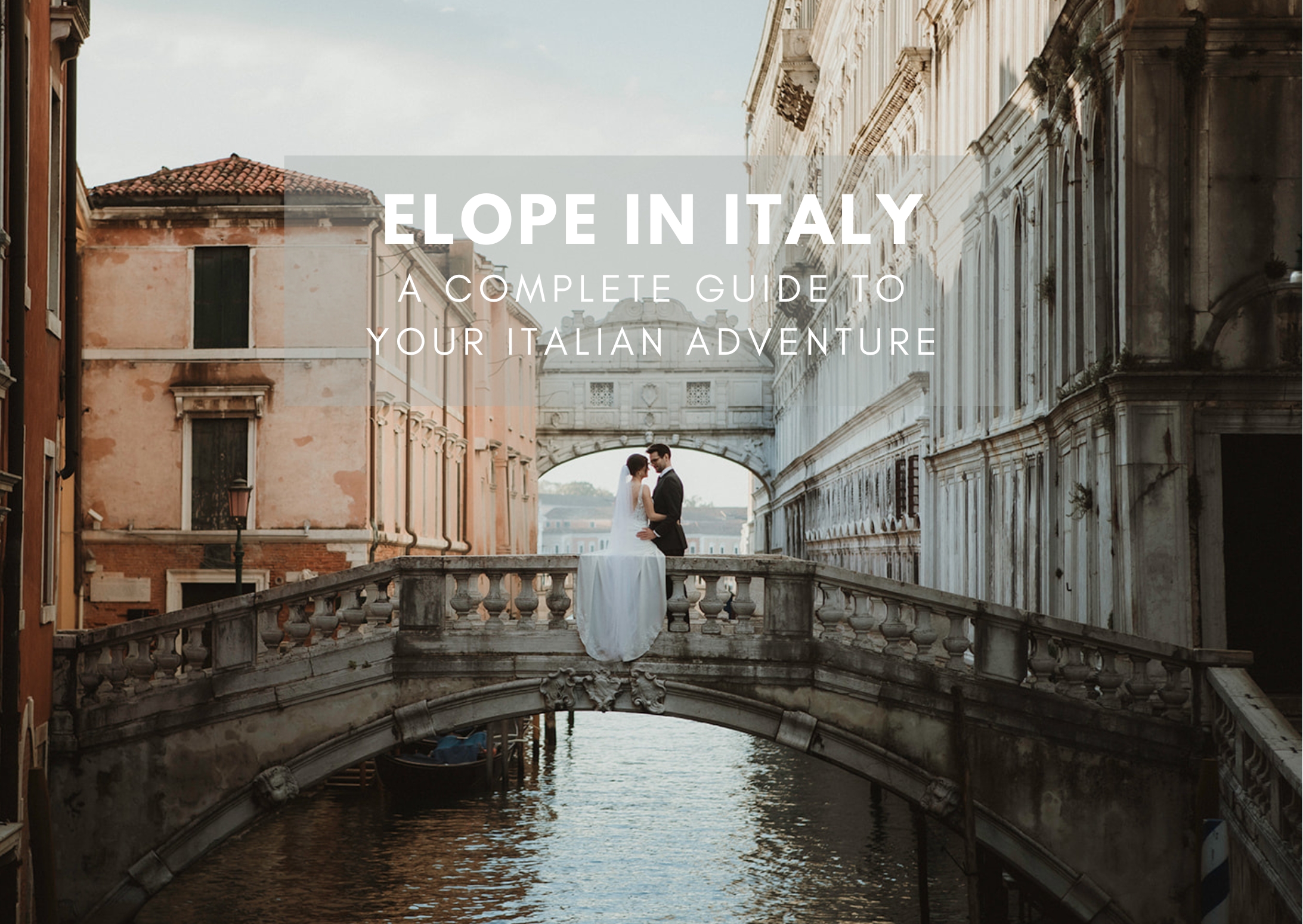
elope in Italy - Venice

An Adventure Elopement on Mount Etna

Marie and Ben came to us torn between a Sicilian vineyard and something more adventurous. We built them a day that did both: vows on a terrace with hand-built stone walls, vineyards below and Etna on the horizon, then hiking boots and a private trek up the volcano with a local guide, far from the tourist routes. They finished with a bottle of the same estate’s wine as the sun went down behind the volcano. Their advice to other couples was simple – put yourself in the hands of people who know the destination.

Read more about Marie & Ben’s elopement in Sicily

Explore more real elopements across Italy on our blog.

ABOUT US – ITALY ELOPEMENT PHOTOGRAPHERS AND PLANNERS

Eloping in Italy is not just a change of scenery. It’s a deeply personal experience shaped by place, light, atmosphere and intention. Working with a team that understands both the emotional and the logistical elements of an elopement can transform the day into something calm, meaningful and beautifully documented. This is where we come in.

Who we are – Benni & Carol

Benni Carol Photography - Elopement Planners & Photographers in Italy

We are Benni Carol Photography, two sisters born and raised in Italy, specialising exclusively in intimate weddings and elopements. We’ve been photographing weddings and elopements for over a decade, across the whole country – from the dramatic Alpine regions to the quiet hills of Tuscany and the southern coastlines – and we’ve built a practice grounded in local knowledge, natural storytelling and a deep respect for the landscapes we work in.

Our work combines:

  • planning expertise shaped by hundreds of elopements
  • documentary-style photography focused on authenticity and mood
  • logistical understanding of Italy’s diverse regions and seasonal variations
  • bilingual communication and local relationships with vendors, authorities and location managers

Our Approach to Italy Elopements

We believe an elopement should feel intentional and unhurried – a day designed around your connection, not a rigid production. Our role is to remove complexity, anticipate challenges, and guide you toward locations, timelines and experiences that reflect who you are.

With every couple, we focus on:

  • creating a calm, supportive planning experience
  • designing timelines built around natural light and landscape
  • incorporating meaningful activities – hikes, boat rides, sunrise moments, vineyard stops
  • photographing the day in an unobtrusive, atmospheric style
  • ensuring weather, season and logistics work for you rather than against you
Adventure couple during a trash the dress moment laughing in the waters of Lake Orta as a storm is approaching on their Elopement in Italy

Where We Work

We plan and photograph elopements throughout Italy, including but not limited to:

  • the Italian Alps (Mont Blanc, Aosta Valley) and Dolomites alternatives
  • Lake Como, Lake Garda and Northern Italy’s alpine lakes
  • Tuscany – Florence, Siena, Chianti and Val d’Orcia
  • Cinque Terre and the Ligurian Coast
  • the Amalfi Coast, Capri and the wider Campania region
  • Sicily, the Aeolian Islands and southern coastal areas
  • Rome, Venice and the country’s historic cities
  • Apulia

Italy is one of the most beautiful countries in Europe, and an extraordinary place to elope. We’re fortunate to call it home, and to know how to navigate its many corners with ease.

Couple dancing after exchanging their vows on a flowery meadow in the Italian Alps

START PLANNING YOUR ITALIAN ELOPEMENT

For couples looking for clarity around costs and what’s included, we’ve outlined our Italy elopement packages and intimate wedding prices.

Or get in touch directly to begin planning your day and book a free consultation.

FAQs ABOUT ELOPING IN ITALY

Below you’ll find answers to the questions we’re most often asked by couples planning to elope in Italy – covering the logistical, legal, seasonal and practical details that come up at every stage of the process.

Is it legal for foreigners to elope in Italy?

Yes. Foreigners can legally marry in Italy through a civil ceremony, provided they complete the required paperwork (such as a Nulla Osta or Certificate of No Impediment), which varies by nationality. Symbolic ceremonies require no paperwork and can be held anywhere.

What is the difference between a symbolic and legal ceremony in Italy?

A symbolic ceremony has no legal validity and can be held anywhere, allowing for maximum flexibility. A civil ceremony is legally binding, must take place in a designated venue, and requires specific documentation. Most international couples choose a symbolic ceremony in Italy and complete the legal marriage at home.

How much does it cost to elope in Italy?

Most couples spend €9,200 – €15,000, depending on the region, season and type of experience. That typically covers planning, photography and the coordination of services such as celebrants, flowers, and hair and makeup. Civil ceremony fees vary by town.

Can Americans legally get married in Italy?

Yes. US citizens can marry legally in Italy by obtaining a Dichiarazione Giurata and a Nulla Osta from the US Embassy or Consulate, along with any required translations or apostilles. The process is straightforward but should be started in advance.

Can UK citizens legally elope in Italy?

Yes. UK couples must obtain a Certificate of No Impediment, have it legalised with an apostille, and complete a signed statutory declaration. Translation requirements vary by municipality.

Can Catholics elope in Italy?

Catholic weddings in Italy are possible for non-residents, though they come with additional paperwork and parish coordination. At least one partner must be Catholic, and both civil and religious requirements must be met.

Do we need witnesses for a civil ceremony in Italy?

Yes. Two witnesses are required for legal civil ceremonies in Italy. If you’re eloping alone, witnesses can be provided.

Do we need an interpreter for a civil ceremony?

If neither partner speaks Italian, you’ll need an authorised interpreter for the legal ceremony. This is standard practice and can be arranged in advance.

How long does the paperwork take?

This depends on your nationality and local embassy or municipal offices, but most couples should begin the process 8-12 weeks before their elopement as some documents require specific waiting periods. Start familiarising yourself with the requirements earlier though – ideally 6-12 months out. Catholic ceremonies need considerably longer, as they involve parish coordination and approval from both dioceses.

Where are the best places to elope in Italy?

Italy offers a wide range of locations, from Alpine landscapes to coastal villages and historic cities. The eight regions we work in most are the Italian Alps, Tuscany, Lake Como, the Amalfi Coast, Venice, Cinque Terre, Rome and Sicily.

Lake Como or the Amalfi Coast – which is better for eloping?

Both are iconic and both sit at the premium end. Lake Como suits couples who want refined Italian elegance, villas and a gentle lakeside atmosphere; the Amalfi Coast suits those who want dramatic cliffs and the sea. Como’s cost sits less in the ceremony than in access and logistics, while the Amalfi Coast rewards eloping off-season, when the crowds thin and the coast belongs to the people who live there.

Is Tuscany or Sicily better value for an elopement?

Both are among the most cost-balanced regions in Italy. Tuscany offers rolling countryside, vineyards and medieval towns with a deep network of local suppliers. Sicily is more cost-accessible still, with dramatic light, wild coastlines, Baroque towns and Mount Etna – and it’s the better choice for couples who want somewhere further from Italy’s busiest destinations.

Should we choose sunrise or sunset?

This depends on the region and the experience you want. Sunrise is best for avoiding crowds in historic cities and busy spots, and it’s the only realistic option in Venice, Rome, Cinque Terre and on the Amalfi Coast in season. Sunset is ideal for mountain elopements in the Alps and for Tuscany.

What is the best time to elope in Italy?

The most favourable months are May to early June and September to October, when temperatures are mild and crowds are lower. July and August are hot, busy and more expensive. Early morning or sunset ceremonies offer the best light and the most privacy in popular regions.

Can we elope in Italy in winter?

Yes. Winter is ideal for dramatic Alpine scenery, quiet cities and atmospheric coastal villages. It’s a beautiful season with fewer tourists, though mountain access may be limited in certain regions.

Can you elope in Italy on a budget?

Yes. Choosing lesser-known regions, avoiding peak season and keeping the day simple can significantly reduce costs. Choosing your season is the single easiest way to bring the cost down, and off-season elopements also offer quieter locations and beautiful light.

Can we elope in Italy with no guests?

Absolutely. Many couples choose to elope just the two of them. Symbolic ceremonies work perfectly for guest-free celebrations. For legal civil ceremonies, witnesses can be arranged locally.

Can we elope outdoors in Italy?

Symbolic ceremonies can be held anywhere – mountains, beaches, forests, vineyards or private villas. Legal civil ceremonies must take place in approved venues only.

Are LGBTQ+ couples able to elope in Italy?

Yes. Italy recognises legal civil unions for LGBTQ+ couples, and symbolic ceremonies can be held anywhere with complete freedom. Many regions and venues are welcoming and experienced in hosting LGBTQ+ celebrations.

How far in advance should we book vendors?

Most couples book their planner and photographer 12-18 months in advance, especially for popular destinations or peak season dates. Mountain and adventure elopements often require early logistics planning.

Can we do a multi-day elopement in Italy?

Yes. Italy is one of the best countries for multi-day elopements, combining hiking, cultural experiences, food, historic towns and multiple landscapes.

What do we wear for an Italy elopement?

There are no rules. Most couples choose outfits that match their location and comfort, especially for hiking or adventure-focused days. Lightweight, natural fabrics work well in warm months, while layers are key for mountains and autumn or winter elopements.

Adventure couple exploring the Ligurian Cliffside coast on their sunrise elopement in Italy
Couple smiling after exchanging their vows on a private boat at sunset for their elopement in Cinque Terre
Couple embracing at sunset with dramatic view of Amalfi in the background during their elopement in Italy
Couple enjoying sunset on a private boat tour during their elopement in Apulia
Couple having a sweet moment in front of San Marco during their dawn elopement in Venice
Couple hiking in the Italian Alps during their two day elopement in Italy
Sunrise elopement ceremony above the clouds in the Italian Alps.
Benni Carol Photography - Elopement Planners & Photographers in Italy

Leave a comment